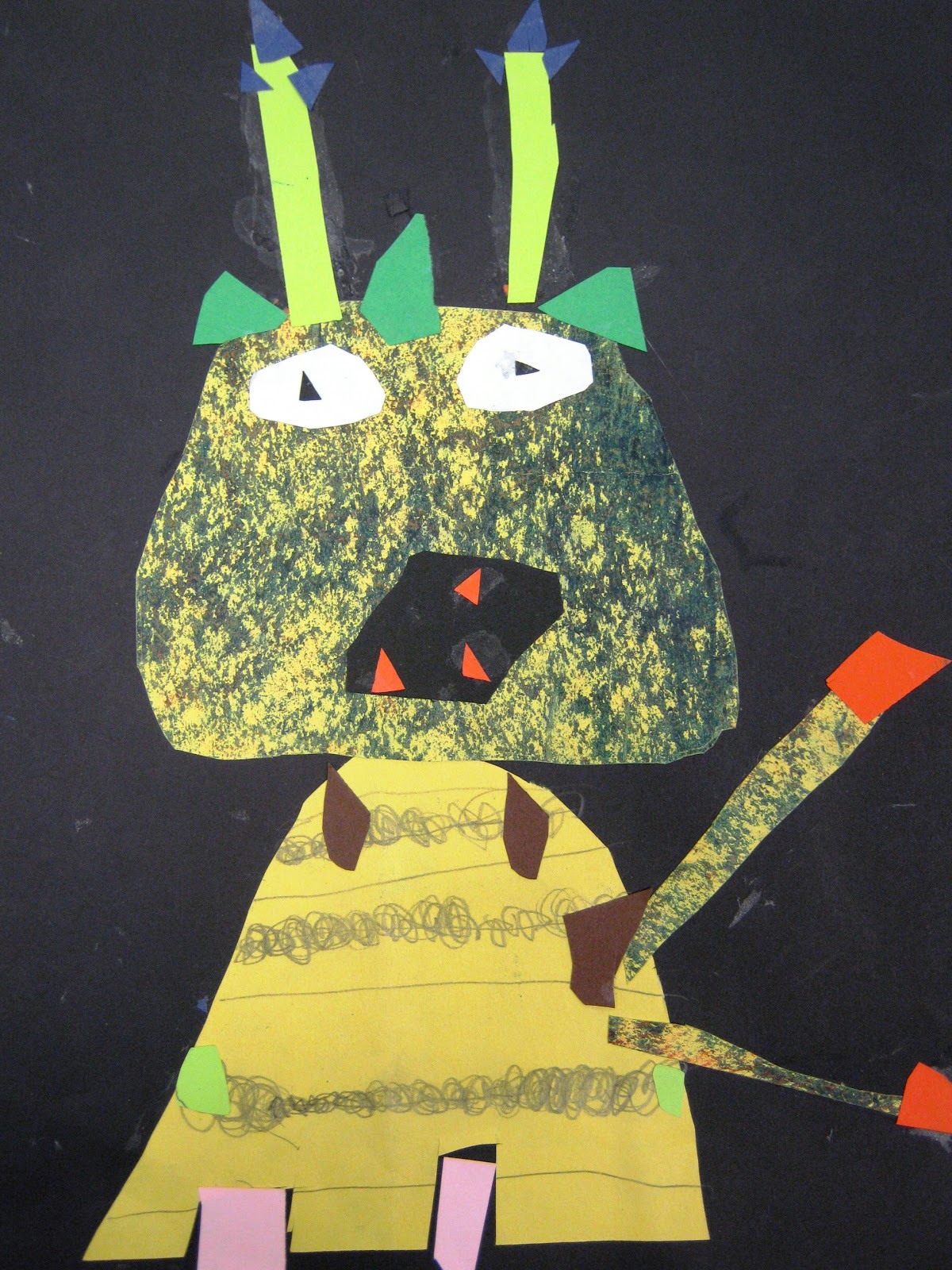
I mentioned these Kindergarten collages on a previous blog post and I figure it is time to share them. They are wonderful! I have to give credit to the PTA for inspiring me to excitedly pull these from my closet; they were looking for art to feature in our school directory. So Creek View friends, keep your eyes open.
Stories are a great way to start an artwork. In this case, Kindergartner's listened to the famous story written and illustrated by Maurice Sendak, Where the Wild Things are. We talked about the illustrations. Kindergarten noticed the feathers, scales, and fur, which opened the door to the element of art, "texture." Aside from texture, we talked about and used geometric and organic shapes but most importantly, we had fun creating something from our imagination.
Showing posts with label Kindergarten. Show all posts
Kindergarten's Clay Houses
This is one of my favorite Kindergarten projects.
Everyone's idea of a home is different or at least it should be ... this is something I remind them. We don't all live in houses that look like a square with a triangle on top. To help move away from that common idea, we start by visualizing and then drawing our homes before making them in clay.
| we colored the bisqued clay with construction paper crayons and then painted over top with black tempera |
| :) |
Kindergarten Landscapes
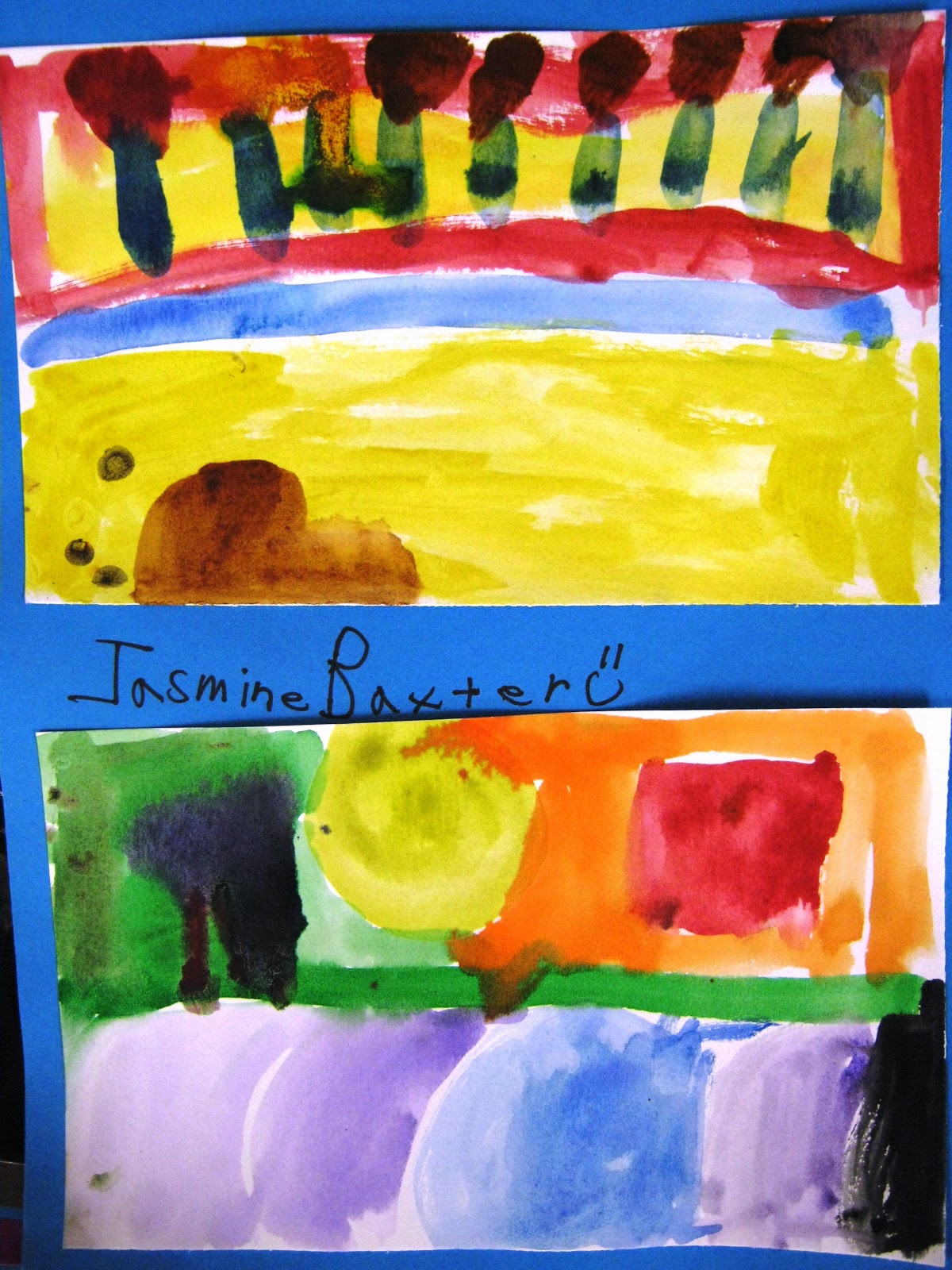
These simplistic horizons, I just love! Prior to this project we made imaginary creatures that highlighted the idea of texture. Sorry I meant to post them around Halloween - they were awesome and still are. It seems I am very backed up with featuring amazing art and artists on here. Bare with me. This time of year gets crazy busy. It is the best time of year even so, and just because I haven't posted much, it doesn't mean we haven't be making wonderful things. Back to the topic of texture. Kindergartners were so smart. They noticed that Monet showed texture in his painting while O'Keeffe has a simple and smooth style of painting. After all, people can make the same exact thing and it can be completely different. In this case, both artists make Landscapes in very different ways. Take a look at my slide show. Kindergartner's enjoyed it and had great conversations about it too!
Notice to the ways that they decided to show daytime versus nighttime - very creative.
| Monet Inspired |
| Monet Inspired |
| Monet Inspired |
| O'Keeffe Inspired |
| O'Keeffe Inspired |
| O'Keeffe Inspired |
LOIS EHLERT INSPIRED COLLAGE
Kindergarten enjoyed these. Cutting, overlapping and gluing shapes together = endless possibilities. We tried really hard to make sure we made it interesting by showing variety and rhythm ... kinda like music you can see. Just lovely and fun to look at.
Doing the Robot
Kindergarten invented ROBOTS!
Art can be made from just about anything. We used found objects to print our robots.
Then we used chalk pastels to add flair to our prints. Each robot is a true invention.
Ask kindergarteners about their robot. They can tell you how they made it, its name, and its special "job."
Jim Dine Heart Weavings
Kindergarten started by viewing and discussing Jim Dine's Four Hearts.
Of course the first thing they noticed were the hearts and the second thing they noticed were all the colors.
So we set off to explore colors and how they can change by mixing with other colors. They painted 3 papers exploring the primary, secondary, and neutral color schemes. Then we cut one into a loom and one into strips to prepare for our weaving. With the weaving we learned that we use an AB pattern, so that was very exciting to see. What was even more exciting was making a symmetrical heart and gluing it into place to see. "WOW."
Beverly Buchanan Kindergarten Clay Houses
Kindergartners love to draw houses... and even more, they love to make them out of clay. We chatted all about clay - what it is, where does it comes from, how can we make it flat and most of all how can we add texture.
After drawing a sketch of a house, we used a rolling pin to flatten the clay into a slab. Then we pressed found objects into the clay.
Subscribe to:
Posts (Atom)