Getting started

The first day of class, I wanted to find out what my students' thoughts were about ART.  After going over the syllabus and procedures in the art room (essentially boring them to death).  I gave everyone a post-it note.  I prompted them to complete the sentence, "Art is...."  I left the format open.  They could write a sentence or two, write a poem, draw a picture, ....  I was happy to learn that most felt art was a positive thing.  Perhaps, I will ask the same question at the end of the quarter to see if the responses have changed or become more complex.  We shall see.
A collection of thoughts ... not the best picture but you get the idea

NEW, NEWS

Over the summer, something exciting happend.  I interviewed for a middle school position and, well,.... I am now a MIDDLE SCHOOL ART TEACHER and I am thrilled!

Ugly Jugs

If you haven't noticed, lately, my classes have been focusing on Georgia artists.  Ugly jugs or face jugs also fall under this umbrella.  They are a southern tradition dating back to the Meader family and some would say it goes back even further to the time of slavery.  Slaves would make them after the working day was done.  Many speculate about why they are so ugly.  My research reveals many reasons but the common thread is they are made to be frightening. 
 
Fifth graders really impressed me. 


big bad wolf and the little piggy


okay... so the objective "ugly" was optional ... cute and quirky work too


kitty cat friends


Peter Loose Animals

Peter Loose is a folk artist here in Georgia.  He was not always an artist.  He once worked at a nature center ... come to think of it ... he may still, because he has a passion and love for nature.  None-the-less, he is inspired by animals. Second graders surely noticed this as they viewed his paintings.
 
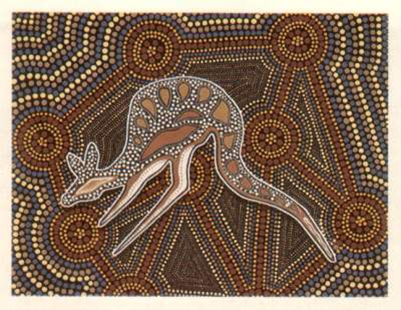
I happened to notice how Peter Looses' art had a lot in common with traditional Aboriginal art.  So, we compared and contrasted these two distinct artists. 
What do you you notice?

Enjoy!


We "pair shared" with each other after we thought we were finished.  I asked that each pair share one thing they really liked about each other's art and offer one suggestion on how to make it even better.  The results were terrific.  They had such wonderful ideas.

Kimmy Cantrell Clay Faces

Last school year, I introduced 4th graders to the artwork of Kimmy Cantrell, a Georgia native.  They enjoyed making these quirky clay faces so much that I brought it back this year.  I experimented a little with the surface but the the objective was the same.  Everyone made a face celebrating imperfection by using assymetrical balance, unexpected textures, and expressive features. 
mostly mustache friends

just a good pair

bewildered

"oooooooooooooooohhhhh..."

great hair style

asymmetry at its finest

successfully imperfect and expressive

3 is a crowd


One of these guys feels a little unsteady.  Haha.  Can you find him?
 *See last year's post to learn and see more.

Rousseau Jungle Landscapes

This is an oldie but goodie for my 3rd graders.  I find the years that I decide to embark on this landscape adventure, 3rd graders love it and have such pride in their completed artwork.  This is important for the effectiveness of an art lesson.  I have certainly tried other ways to teach depth but I always come back to this one.  I love that Henri Rousseau is a well-known Folk artist and I think it is pretty neat that he was never to a jungle yet he painted jungles based on pictures.  This is a fact that most 3rd graders can relate to … not many have been to a jungle. 
The focus of the project was to show depth using many techniques from dividing our space into foreground, middle ground, and a background to overlapping and size variation.  We even touched on how the appearance of colors and details lessen with greater distances.  Another thing we noticed with Rousseau’s jungle landscapes was the vast variety of plant life.  We also saw the rainbow of greens any how this variety makes the artwork much more interesting.
After some visual thinking strategies involving Rousseau’s art, we began by carefully observing and drawing a variety of plants.  Then we got to drawing some landscapes.


Surreal Perspectives

Rulers really do make all the difference.  4th graders discovered this when drawing in 1 point perspective to show depth. Though, drawing to give the illusion of space wasn’t the only thing we did.  We discovered the fantastical world of Surrealism, where visual artists and authors use juxtaposing objects or ideas.  Why? Well, to cause the viewer to ask, “why.”  When viewing Surrealism, people often create a story that is inspired by personal experiences and feelings to make sense of what they see. Look at 4th grades’ surreal perspective drawings; try it … you’ll see.


The artist Rene Magritte is a well known Surrealist.  This painting and others inspired our ideas.